Division
20th Sunday in Ordinary Time (C)

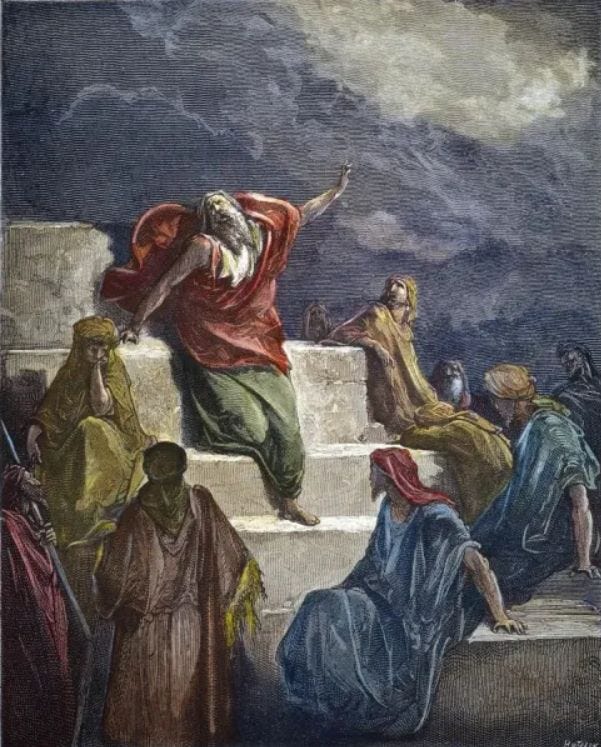
Jesus says he does not come to bring peace but opposition, dividing even the members of a family.
There are two kinds of disunity. One is the opposition and hostility which results from sin, by which the devil divides and destroys families. This is the opposition caused by envy, selfishness, impatience, lack of forgiveness, and pride. The devil makes constant use of this sinfulness to wreak havoc on the human race, causing wars and unhappiness, division and destruction.
Jesus does not cause this havoc. Instead, it is this lack of peace which he seeks to heal and overcome by bringing true peace. The division and opposition which Jesus refers to is that created by the prophet of God. The prophet must “speak God’s word,” giving witness to the truth and revealing God’s law, but this results in some division.
Jeremiah (cf. first reading) was such a prophet, and he caused great upheaval in Jerusalem when he confronted the religious and political leadership of his time for their failures. The letter to the Hebrews (cf. second reading) likewise speaks of the great cloud of witnesses in the Old Testament who served God and bore witness to the truth, and who suffered for their faith. Speaking of Jesus as the greatest of all prophets, the sacred author urges us to “consider how he endured such opposition from sinners” (Hb 12:3). Opposition, division, persecution, are a regular characteristic of Christian life.
If we are to serve God faithfully, we must therefore be prepared to give witness, even when it results in challenge or discomfort to those around us. It is not possible to “be like everybody else,” or go along with the world.
For instance, if everyone uses foul language, not only must we avoid doing so ourselves, but we must also take the step of asking others not to do so. This gives witness to the truth (such language is bad and ugly), and reveals the law of God (2nd Commandment governing respectful speech). Even when done politely and respectfully, such a prophetic action will often generate a hostile response. Jesus says be prepared to accept that, including from the people closest to you.
Christianity by its nature will be controversial, because it is prophetic and calls us to live beyond the desires of the flesh and the world. It must challenge the status quo, and constantly expose the lies and political correctness which foster false peace and unity. And how greatly the Lord desires that this fire burn throughout the whole world to purify and transform it. But it has to take hold first on the most local level: our own soul, and have its first effect in our most immediate relationships, in the home.
Spouses sometimes contend, parents don’t always get along with their children, siblings very often fight with each other. These situations are evidence of sin, but they are also the context for grace, and the place where grace can begin to heal and transform into true unity, based on truth. The fire of God’s love – the outpouring of the Holy Spirit – must burn in these situations. The conflicts reveal the areas which need healing, and the healing will come about through prophetic word, i.e. the truth and God’s law. Every division, then, is an invitation and opportunity to be converted and grow in holiness, exactly what Jesus desires.
Thus, if everything were peaceful and without upheaval, there would be no healing and redemption. It would be a false peace. The division Jesus brings is precisely that which will lead to true peace, which is conformity to the truth and God’s Law.