Envy
25th Sunday in Ordinary Time (A)

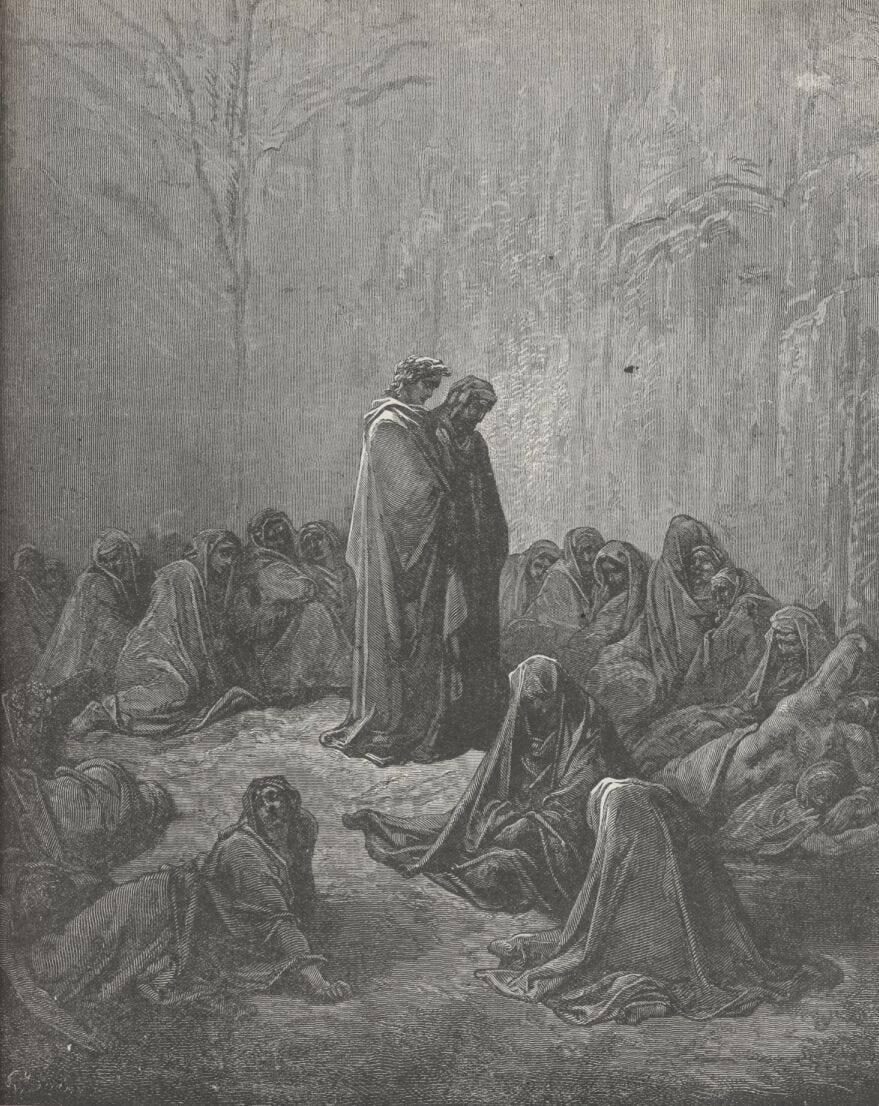
Envy is one of the seven capital sins, and Jesus’ parable of the Workers in the Vineyard illustrates why it is a deadly sin. At the end of the parable, the landowner challenges the workers who got paid the same wage as the latecomers: “are you envious because I am generous?” (Mt 20:15)
Jesus very carefully sets up a situation that we recognize is highly “unfair”: why should the laborers who worked only one hour get the same pay as those who worked all day long in the hot sun? (Mt 20:12). Yet is it unjust? The landowner tells one of them: “my friend, I am not cheating you at all. Did you not agree to work for the usual daily wage? Take what is yours and go” (Mt 20:12-13). There is no injustice here. The landowner did not rob or deprive any worker what he owed him. The simple fact of the matter is, the landowner decided to be generous with the late workers, giving them the same wage even though they worked fewer hours. We do not know the reasons for that generosity, but the landowner does not have to justify himself. It is his money! “What if I wish to give this last one the same as you? Or am I not free to do as I wish with my own money?” (Mt 20:14-15). The issue here is not justice, the issue is envy.
If the early workers never found out what the later workers received, there would have been no problem. Everyone would have been content and happy. But because they saw what their neighbors received, they became envious. Envy results when we compare ourselves to others, and decide that the situation is not fair, based on our perspective of what is just and what others deserve. Envy is defined as “sorrow in another’s good.” It’s not that we have suffered an injustice, but that we are resentful that our neighbor received a good or blessing we do not believe is “fair” or deserved. Moreover, our anger is justified by a strong rational argument. Envy is deadly in its result, and also in the way it entraps us.
God is supremely just, and generous. Yet, like any parent with children, God deals differently with different people. And we do not know His reasons. Moreover, what we consider to be blessings are not necessarily the blessings which God sees as most important. We may become envious of our neighbor’s undeserved material prosperity, yet Jesus says “More blessed are the poor in spirit” (Mt 5:3).
It may not seem fair to us why certain individuals seem to get more, or “have it easier.” Some people live very strict moral lives since their childhood, enduring many sacrifices and penances in order to please God. Others live most of their lives doing as they please, and only repent in the end when the final hour approaches.
In this situation, the one most in danger of losing salvation is not the late-comer, but the one who was faithful all his life, due to envy. Like the older son in the Parable of the Prodigal Son (cf. Luke 15:25-32), envy will keep a lot of people out of heaven, because in their eyes God is not fair! Jesus warns, “the last will be first, and the first will be last” (Mt 20:16).
Envy, then, is a dangerous sin, because it can creep up on us precisely when we think we are being good. Envy is insidious, because it works through the façade of justice. Envious people have a very acute sense of justice! But envy, building on pride, is actually an overstepping of our bounds: we are presuming to determine what is the just scale, when in fact it is not for us to decide. And we are doubting the generosity of God.
Envy is a sin that comes from the eye. The Greek word for eye, “ophthalmos” is often used by Jesus when warning about sin. “If you eye causes you to sin, better to tear it out…” (Mt 5:29). “The eye is the lamp of the body. If your eye is sound, your whole body will be filled with light” (Mt 6:22). In Mark 7:22, the word for eye directly means envy. And in the Gospel parable today, when the landowner asks the worker if he is envious, he literally asks him (in the Greek), “is your eye evil because I am generous?”
Envy is a sin of the eye because it is the through the eye that we compare. The eye provides subjective perspective. Everything is fine, until we see our neighbor and start comparing our situation with his, then all of a sudden it is unfair. So the eye is the problem. And when we see the unfair situation, our eye looks upon our neighbor with hatred. The eye literally curses the neighbor.[1]
God judges each person on his own terms. God is fair, and above all God is generous. Each person must answer to God for his own work, and not for that of his neighbor. Let God deal with your neighbor. For your part, be the kind of person, like St. Paul in the second reading (Phi 1:22), who is willing to work fruitfully regardless of circumstance, as long as needed by the Lord, because it is a privilege to serve in His vineyard. What is most important is not how much my neighbor gets away with compared to me, but that the quality of my work during the past week is worthy of the offertory at the Sunday Mass. Sloth may prevent my neighbor being able to make a worthy offering, but God forbid that Envy prevent me!
[1] In Dante’s Divine Comedy, the Envious are purified of their sin in purgatory by having their eyes sown shut with metal wire!