He Ate Fish
3rd Sunday of Easter (B)

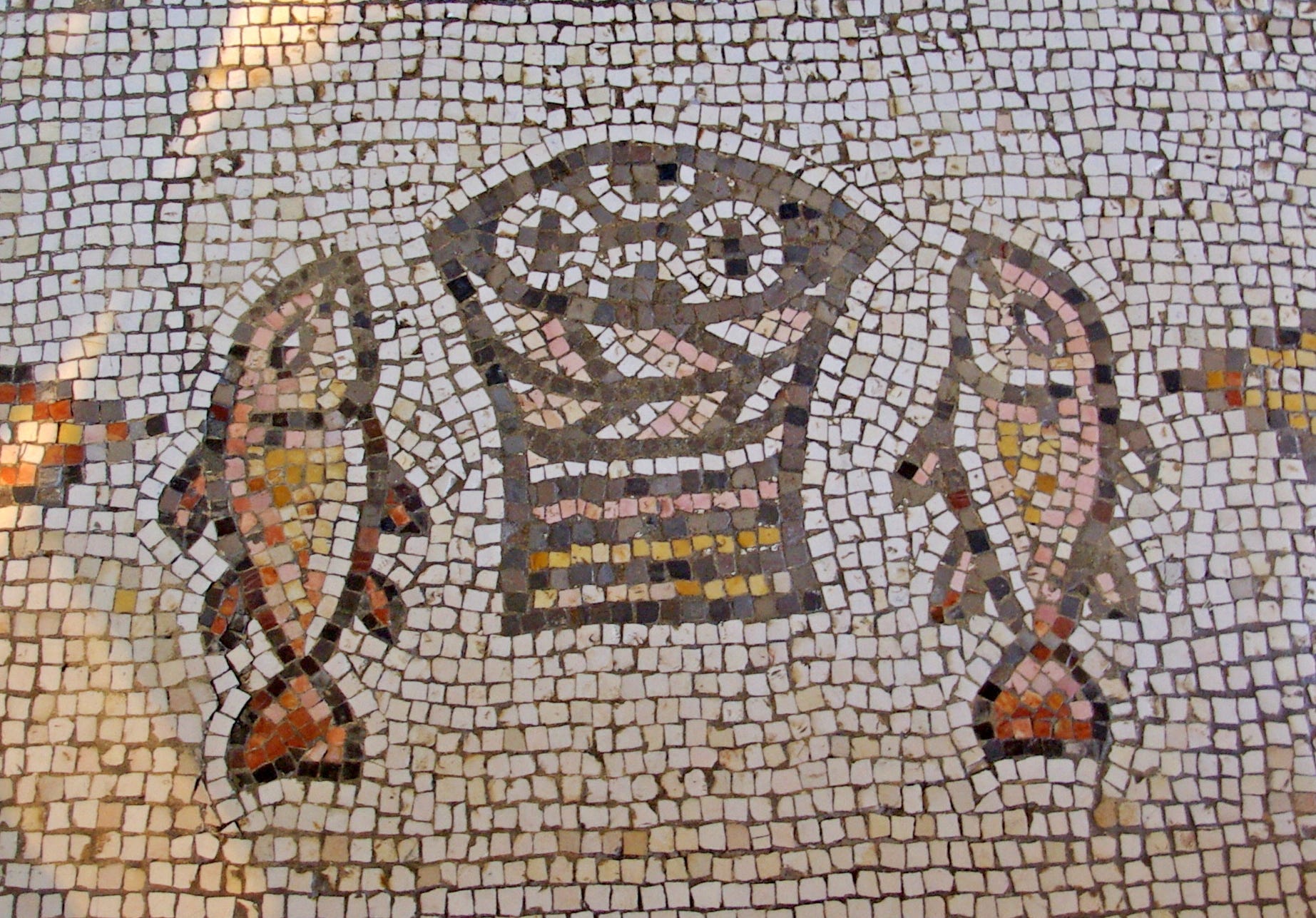
As with the Gospel last Sunday (Jn 20:19-31), the Resurrection account from St. Luke emphasizes the weakness of “sight” with regard to the Resurrection. When Jesus appears in their midst, they “thought that they were seeing a ghost” (Lk 24:37). They could not believe their eyes. Jesus goes to great lengths to overcome this obstacle, and as with St. John’s Gospel, the sense of touch is more helpful: “Touch me and see, because a ghost does not have flesh and bones as you can see I have” (Lk 24:39).
In the seven Sacraments of the Church, by which the Risen Lord manifests himself in the lives of the faithful, it is the tangible elements that are important: water flowing, oil imposed, bread eaten... We don’t see the Risen Lord with human eyes, instead Jesus is made known to us and we recognize him by means of the sacramental signs (cf. Lk 24:35).
Nevertheless, for the Resurrection appearances it was important to Jesus that he showed himself physically raised from the dead, since this is the underpinning of the Sacraments. Many people today, even including supposed Christians, will try explain away the Resurrection as some kind of spiritual, symbolic, visionary, or mystical experience of the first disciples. But even though they struggle to communicate fully this new reality, unlike anything we currently know, the Gospels absolutely rule out the false notion that the Risen Jesus was some kind of ghost or apparition.
The extreme physicality of the Resurrection is highlighted by the next act of Jesus, which is to take a piece of fish and eat it in their sight (Lk 24:41-43). St. John’s Gospel also recounts how later on the Sea of Galilee Jesus eats fish and bread with his disciples after the Resurrection (cf. John 21:9).
Thus begins the use of the fish as a Christian symbol. The Greek word for fish (IXTHOS) is a convenient acronym for “Jesus Christ, Son of God, Savior). Because of its use in the miracle of multiplication (cf. John 6:11), it is a convenient Eucharistic symbol, since that miracle prefigured the Eucharistic Bread of Life. It is also a good symbol for the Kingdom of God, which is depicted as the netting of fish into the boat by the fishermen-apostles.
But it is this action of Jesus at the time of the Resurrection that gives the fish its great personal “endorsement” as a Christian symbol. The fish was used by Jesus to prove, definitively, his Resurrection. It is then for Christians a wonderful “secret code” for our faith, which can only be fully appreciated by others when they have come to know the full story. Like Christians of the early Church, we should continue to the utilize and display the symbol of the fish whenever possible.
But we should also eat fish whenever possible, connecting it in our minds with the Gospel. Catholics have a centuries-old tradition of “eating fish on Fridays” as an act of penance in honor of the Passion of the Lord.[1] I encourage Catholics not to lose this tradition, but emphasize it more, and not simply as an act of penance, but as an act of devotion in honor of the Resurrection, and as a reminder of our Christian faith.
[1] The Law of Abstinence from the warm-blooded flesh (“meat”) on (all) Fridays, not just during Lent, remains in effect. Outside of Lent, Catholics are now permitted to substitute a different penance, but the ordinary practice of Friday abstinence from meat remains as a precept.