Maniple
25th Sunday in Ordinary Time (B)

Service is a distinctively Christian quality. In the sense that Christ told his followers that “If anyone wishes to be first, he shall be the last of all and the servant of all” (Mk 9:35).
This is a revelation about God. God is the highest. He is all-powerful and has all dominion; everything is below Him. And yet, He serves His creatures. It may even be the case that God made His creatures in order to be able to manifest this divine quality in Himself, the desire to serve and give. In another part of the Gospel, Jesus makes the divine truth explicit: “The Son of Man did not come to be served but to serve, and to give his life as a ransom for many” (Mk 10:45).
If we wish to be “like God,” we must be of service. On the other hand, the highest angelic creature Lucifer, who thought he was “like God,” followed the motto “non serviam,” precisely because he saw himself as the highest of all creatures.
All pagan societies cultivate the luciferian attitude that certain people are destined for the “service class,” to benefit those who are “elite.” No one deliberately takes on the menial tasks if someone else is available (or can be paid) to do them. But Jesus teaches that service is essential, and the “higher” one is with regard to position or power, the greater the duty to serve.
Christianity brings a corrective to pride in the command to serve. In the Christian societies, people would introduce themselves, even to strangers, with the phrase “at your service.” The world becomes a better place when this distinctive teaching of Jesus is practiced.
All are called to serve, but it is the “hierarchy” who must be first. Jesus has to correct the apostles, who were arguing about who was the greatest. The clergy (bishops, priests, deacons) are entrusted with authority in order to serve, not to lord it over others. The first “order” is that of deacon, which literally means servant.
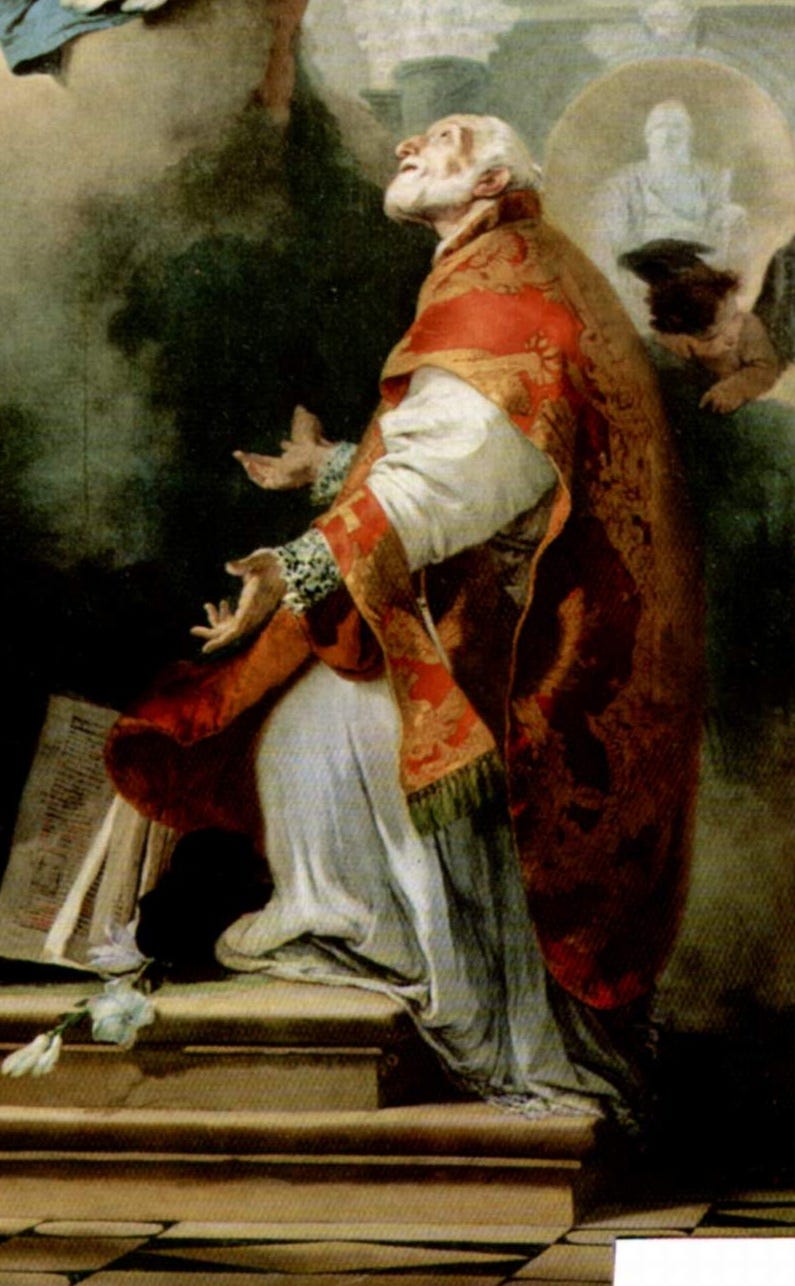
The role of servant is emphasized for the clergy in the sacred vestments they wear. One of these garments is the “maniple,” worn on the left hand.[1] The maniple recalls the towel worn by the server over his forearm as he attends to the table of the guests. In the Eucharistic Banquet of the Mass, Christ is the host, while the priest is the servant.
Let us take to heart this Gospel. A Christian does not shun servile tasks, but even embraces them and deliberately chooses them. In this Jesus assures his disciples they are serving God Himself. In fact they are becoming “like God.”
[1] Or at least, there used to be. This practice seems to have stopped after Vatican II