Most Rare Jewel
Solemnity of All Saints, and Commemoration of All Souls

“And in the Spirit, he carried me away to a great, high mountain, and showed me the holy city Jerusalem coming down out of heaven from God, having the glory of God, its radiance like a most rare jewel, like a jasper, clear as crystal” (Rv 21:10-11).
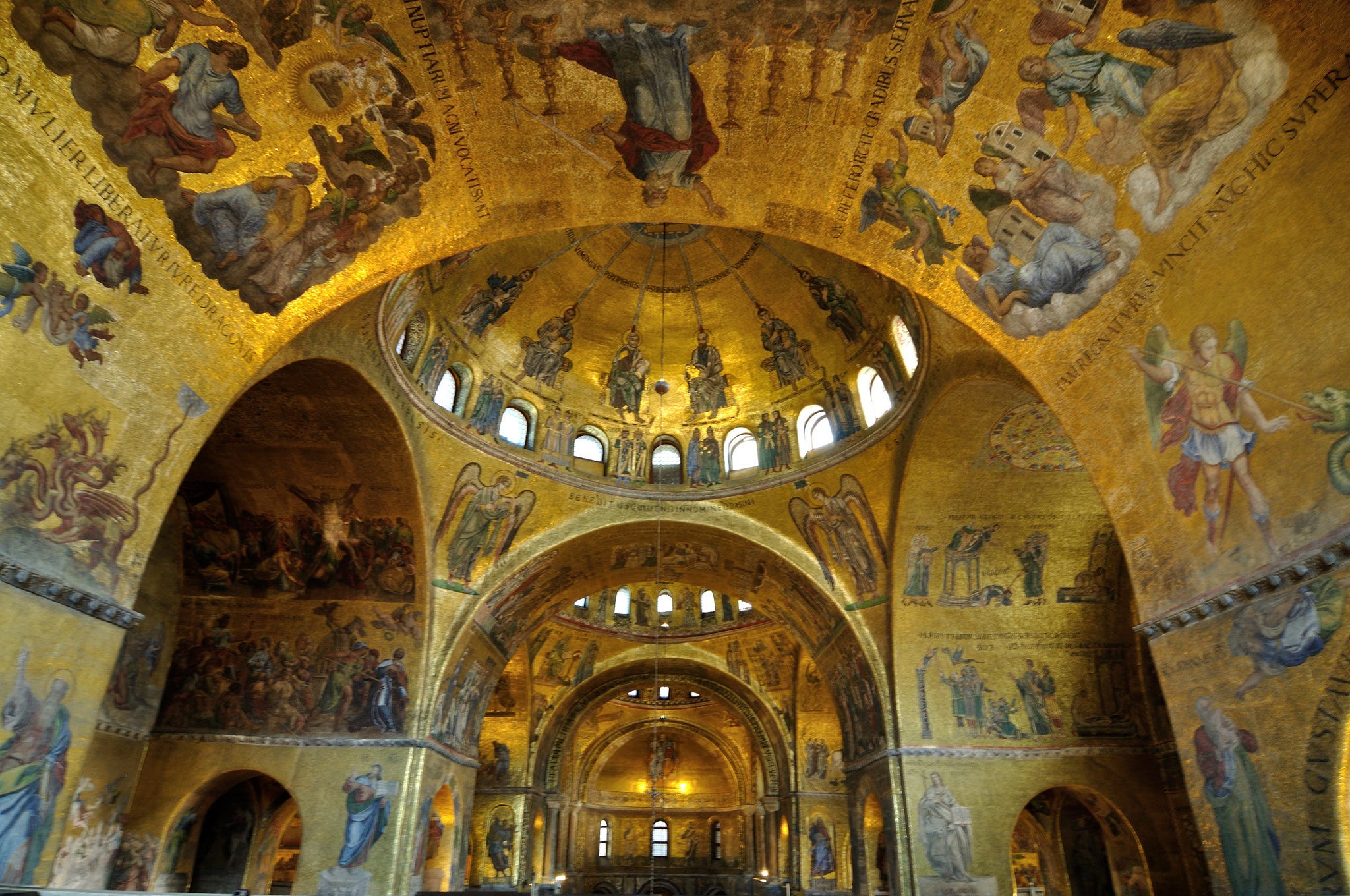
When Christians were first able to build churches publicly after the persecutions ended, during the glorious “Byzantine” era, they were decorated with incredible mosaics: thousands, and millions, of tiny polished and colored stones arranged in patterns and images to depict the glory of God and the mysteries of salvation.
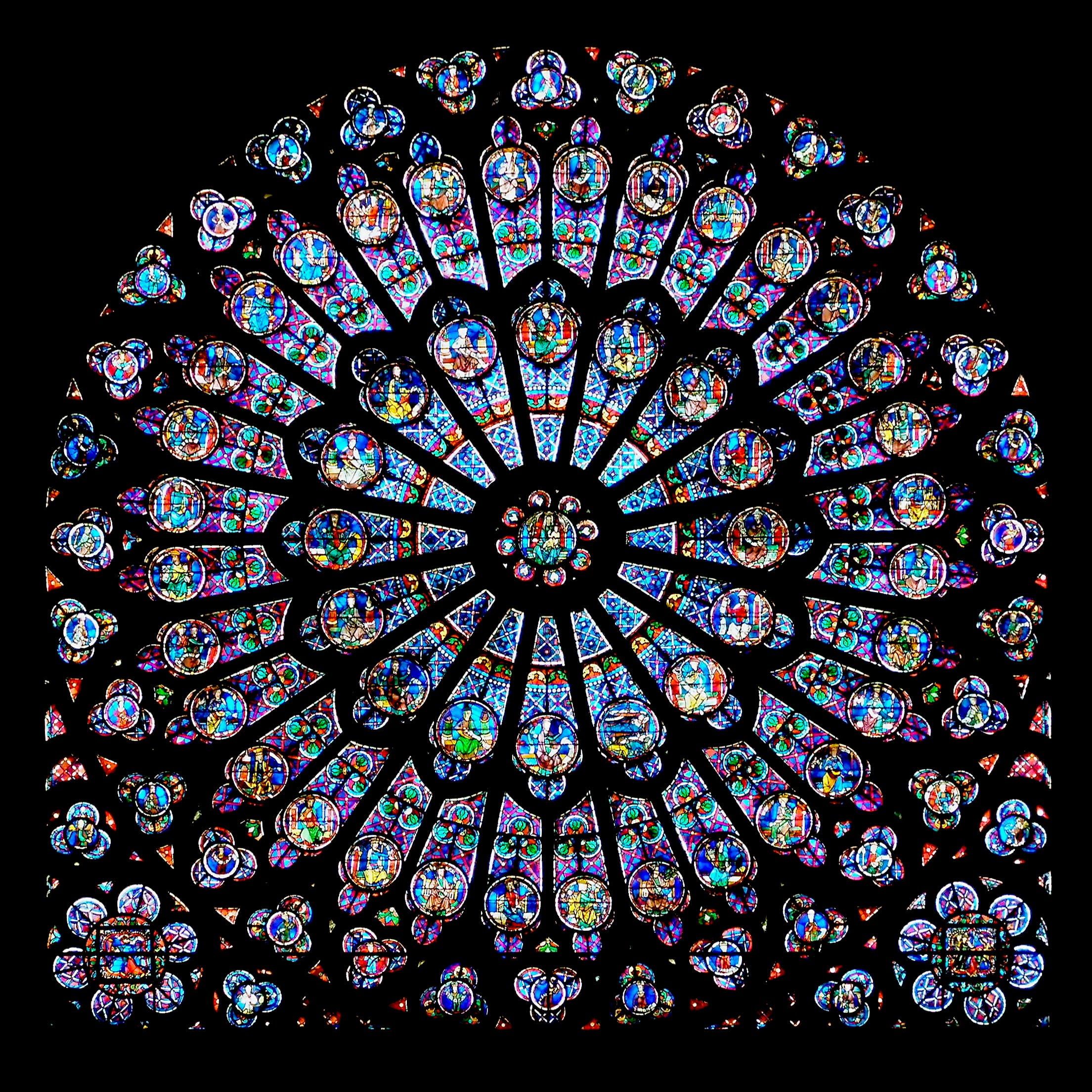
Later in the Middle Ages, Christians invented the artistry of stained glass windows: thousands, millions, of small colored crystals arranged in patterns and images to depict the glory of God and the mysteries of salvation in the lives of his people. The “rose window” of the gothic cathedral was a culmination and focus of everything the church on earth exists to achieve: heaven glory.
These architectural practices stem from the Book of Revelation, which – among other images – describes the heavenly city of Jerusalem in terms of jewelry and gold: “the foundations of the city were adorned with every jewel; jasper, sapphire, agate, emerald, onyx, carnelian, chrysolite, beryl, topaz, chrysoprase, jacinth, amethyst, pearls” (cf. Rv 21:18-21). The stained glass windows and beautiful mosaics in our churches are meant to depict the heavenly glory of angels in saints, in which we share on earth. A church is a place where the glory of heaven can be found on earth. Each of those polished stones, crystals, and jewels, represents the Christians whose lives of holiness give glory to God by reflecting His light.
What makes a jewel spectacular and valuable, is the way it reflects the light. In darkness, a jewel is just like any other stone. But in the light, it becomes more than itself. This is why “jewels” are used in the Bible to depict the souls of the saints (and angels) in heaven: they are created for one purpose: to reflect or “magnify” the light of God.
Heaven is difficult to imagine or describe – there are no earthly words or concepts to convey what God has prepared for those who love Him. But this biblical image of jewelry (or mosaic, or glass) is a helpful one to assist our imagination, as we try to meditate on the indescribable glory of heaven to which we are called.
Just as jewels are nothing by themselves, but discover their glory in the light, so our lives are nothing but darkness without the glory and grace of God shining through our souls. Just as jewels are found in many colors, so are the saints and angels grouped into various orders: apostles, martyrs, confessors, virgins. And just as every jewel is completely unique in the way it captures and reflects the light, so each soul uniquely manifests the glory of God.
God is great, magnificent, and infinitely beautiful in His glory. God needs nothing beyond Himself. And yet, God “outdoes Himself” by creating the myriad creatures who will reflect His glory individually, and together create an immense mosaic of beauty and glory that we will one day beyond first-hand in heaven. God makes Himself “more” glorious by means of this golden, bejeweled, heavenly city, in which the creature participates in His own joy by reflecting it.
Meditating on what heaven is, makes us realize what work we have to do on earth! Just as jewels when they are first dug up are nothing spectacular, so we are initially “diamonds in the rough,” covered in layers of sin, and dark within. A jeweler must cut and polish the stone repeatedly, cut again and polish it again, to bring out its luster. We too need to be purified and perfected, cut and polished by grace through the crucible of life, to become saints, shining in the full beauty of our innate dignity.
We can understand then how “Purgatory” is an essential part of the process by which we come to “Heaven.” Purgatory begins on earth – this is the fundamental reason for having this life, and God’s glory must already be shining through our soul when we die, if we are to be part of that grand mosaic of heaven (i.e., we must die “in a state of grace,” and not “mortal sin” where the soul is dead, dark, and without sanctifying grace). But even when we die in God’s grace, there is still the final perfecting of the jewel that is needed in order for it to take up its eternal place in God’s Kingdom, and manifest His Light in the exact way needed to contribute to the beauty of the whole. The holy fires of Purgatory burn away the last vestiges of imperfection and darkness, so that the soul provides no obstacle whatsoever to God’s glory. The jewel is now “most rare” and perfect.
When we celebrate the canonized saints of the Church, we are celebrating the lives of those Christians whose souls reached a very high stage of perfection before they died (only Mary died truly perfect—so that actually she did not die at all but was assumed immediately, body and soul, to the glory of her heavenly place). When we meet the saints or study their lives, we recognize Christ shining in them. We see the glory of God reflected in an earthly life. We benefit from the blessing it brings. The saints already gave a glimpse of heaven on earth. They fulfilled what the Lord taught us pray for: that it might be “on earth as it is in heaven.”
A few months ago (20th Sunday in Ordinary Time C) we began this parish reflection on the lives of the saints, based on a verse from second reading, the Letter to the Hebrews. As we come now to the dual feastdays which celebrate the Communion of Saints – the Solemnity of All Saints and the Commemoration of All Souls – let us return to that verse and once again take its meaning to heart:
“Since therefore we are surrounded by so great a cloud of witnesses, let us also lay aside every encumbrance of sin which clings so closely, and let us run with perseverance the race that is set before us” (Hb 12:1).