Prophecies
Epiphany

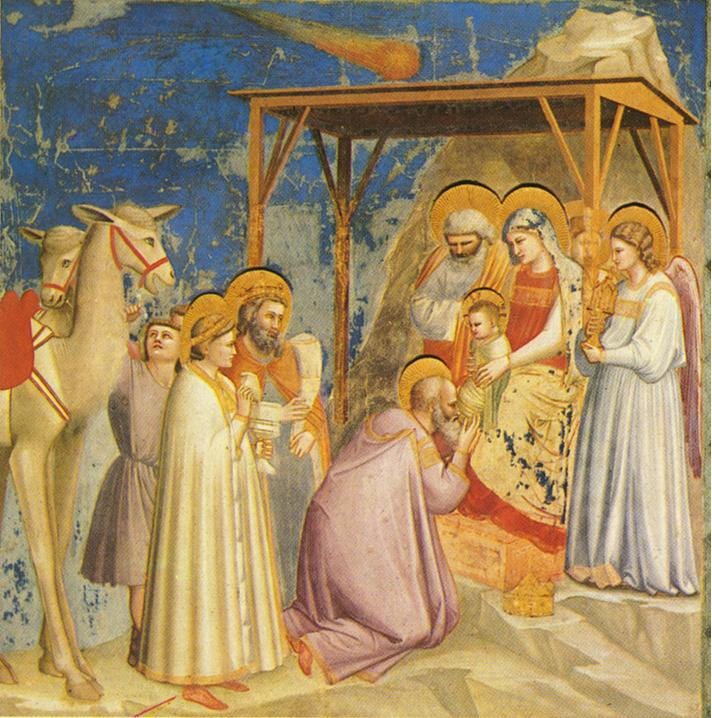
“And you, Bethlehem, the land of Judah, are by no means least among the leaders of Judah. For from you shall go forth the ruler who shall guide my people Israel” (Mt 2:6)
Biblical prophecies are mysterious. They accurately foretell what will take place, yet their fulfillment eludes any human ability to predict. Only in their fulfillment is their full significance as prophecy realized. Far from diminishing a prophecy’s value, this increases its witness as a divine revelation. When we can marvel how the prophecy became “more than itself” in its fulfillment, it becomes a powerful proof of God’s truth. This proof has led millions to Christ.
When the Magi from the East arrived in Jerusalem asking about the Messiah-King, the “Magi” of the West were taken by surprise. Herod, the high priests, and scribes scrambled to consult the prophecies of their own scriptures, yet ironically their meaning had eluded them. It was the foreigners who were more knowledgeable: Herod had to ask them to find the Jewish Messiah for him!
The prophecies of the Old Testament (like the Parables of Jesus in the New Testament) both reveal and conceal. An additional grace of enlightenment is needed, and this will require a pure and humble heart. In the story of the Magi, this can be seen in the light of the star, which guided the Magi to their destination, yet did not seem to help Herod and the Jews. God sends His light to guide those who seek Him, but not all have the proper disposition for this grace.
It is indeed ironic that the foreign Magi found the newborn Christ whereas God’s own chosen people did not. Herod was arrogant and hard of heart, and wanted to kill the child. This foreshadows what would take place later in Jesus’ life, when the Jews turned on him and put him to death: “He came to his own, and his own people received him not” (Jn 1:11). It foreshadows what would take place later in the Church, when the Jewish nation did not convert, yet the Gentile nations were baptized in great numbers.
Two thousand years later, the mystery of the Epiphany continues to play out, as peoples from all over the world – we ourselves included – find Jesus Christ and worship him as Savior and Lord, while Jews continue to reject Christianity.
In many ways the prophecies of the Old Testament are that shining star today (Mt 2:2,10), that continues to guide people inexorably to the one place where the full truth of God and the salvation of mankind can be found: Jesus of Nazareth, born at Bethlehem in the land of Judah, during the reign of King Herod and Caesar Augustus. Gentiles do not have to become Jews first, to see clearly how the prophecies are fulfilled in Jesus. There is no other human being whose life was so fully foretold, not only where and when he was to be born, but what he would accomplish. These prophecies, delivered hundreds and even thousands of years before his life, give exacting details about his death and resurrection in particular.[1]
After their search, the Magi entered the house and found Jesus with his mother Mary. People today also enter the Church and find Jesus with Mary. “Bethlehem” means “House of Bread.” The Catholic Church is literally the House of the Living Bread come down from heaven (Jn 6:51), the Holy Eucharist, which nourishes us with eternal life. Like the Magi who prostrated themselves and offered their precious treasures of gold, frankincense, and myrrh, we come to Mass Sunday after Sunday to offer Eucharistic worship, giving the precious treasure which is pleasing to God, our lives poured out in union with that of Christ.
Though we have “found” him, let us continue to seek him more deeply, allowing the prophecies on every page of Holy Scripture to reveal more fully the truth of our faith. Like the Holy Magi, let us have hearts that are pure and humble, faith that is courageous, and wisdom to evade the deceptions and traps set by those who have rejected God.
[1] One of my personal favorites being the story of Abraham sacrificing his son Isaac (Gn 21), an event which took place two thousand years before Christ, and one thousand years before the founding of Jerusalem, which gives the exact location and numerous other details of Jesus’ own passion and death. 1) Going up to Jerusalem (Mt Moriah); 2) riding on a donkey; 3) accompanied by two servants; 4) carrying the wood of the cross on his own shoulders; 5) fixed to the wood; 6) being the sacrificed “Lamb of God”; 7) wearing a crown of thorns; 8) miraculously delivered from death; etc.