Sheol
26th Sunday in Ordinary Time (C)

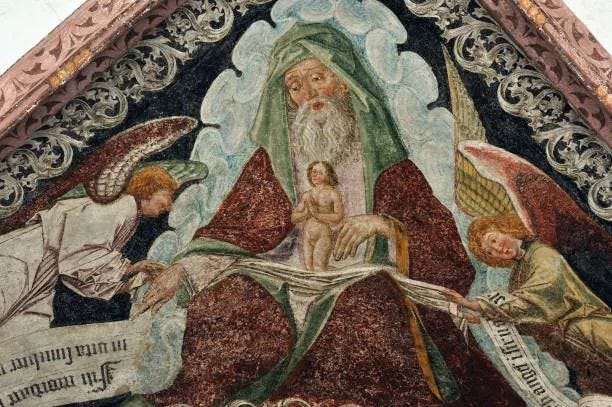
The parable of Lazarus the beggar is a warning about the eternal consequences of our actions. How we behave and act right now is determining whether we will be with God and the saints in heaven, or cut off from Him in eternal damnation.
This is the only parable of Jesus where a character is named: Lazarus. Jesus later fulfilled the parable by actually raising someone from the dead named Lazarus, bringing him back to earth as a warning. Even so, the Pharisees didn’t believe, and when he raised Lazarus from the grave they determined all the more to kill him (Jn 11:43-50). “If they will no listen to Moses and the prophets, neither will they be persuaded if someone should rise from the dead.”
In this parable Jesus also opposes the heretical teachings of the Sadducees, who denied the afterlife and resurrection of the dead, as well as the existence of angels (Acts 23:8). Jesus teaches all of these truths by means of this parable: the existence of the soul in the afterlife, the judgement to take place, the coming resurrection, and the ministry of angels.
This parable is also instructive because it teaches about the place of the dead called the netherworld (“Sheol” in Hebrew, “Hades” in Greek). Before the coming of Christ, when people died their souls did not go to heaven. Only through the Resurrection of Christ do we have access to heaven, which is the Beatific vision of seeing God face-to-face. Prior to Christ’s Death and Resurrection, which broke the curse of Original Sin, the souls of all mankind went to the “underworld,” a place of darkness and separation from God below creation, awaiting the fulfillment of the covenant which God promised to Abraham.
Jesus tells us that in Sheol an initial kind of judgment has already taken place. Those who are destined for heaven – all the saints of the Old Testament – are gathered in the company of Abraham, while those souls who are to be damned are separated from them by a great chasm. In the bosom of Abraham there is already rest and consolation even though there is not yet the vision of God, while on the other side there is already torment and flames, even though it is not yet the final damnation.
In the Apostle’s Creed we profess that following his death and burial, the soul of Christ also descended to Sheol. But Jesus’ human soul is united substantially to the Person of God the Son, who is eternal Life and Light. Jesus shattered the gates of the underworld, which could not prevail against him. He is the Light which overcomes the darkness, the Resurrection which overcomes the power of death. In conquering death, he liberated the souls imprisoned in darkness, and led them triumphantly to the heavenly city.
Even though the next life is unknowable and shrouded in mystery, this parable of Jesus is valuable because it gives revelation about many aspects of the next life, which includes the existence “places” or “stages” before a soul actually sees God in heaven. Through Jesus’ subsequent miracle of the raising of Lazarus, Jesus confirms the truth of his parable: there is an afterlife for the soul, and there is an eternal judgment we will face based on how we love or fail to love our fellow man in this life.
As in the days of Jesus, there are many people today like the Pharisees who deceive themselves about their goodness and fail to prepare for judgment, and many like the Sadducees who deny the existence of these “Last Things.”
One other detail Jesus mentions in the parable is the angels, who carried away the soul of Lazarus to the bosom of Abraham. Those who deny the existence of the soul, the afterlife, heaven and hell, also deny the existence of angels. But the Scriptures and the teachings of Jesus are filled with constant references to the existence and activity of these heavenly messengers:
· Seraphim, Cherubim, and Thrones who surround the presence of God in heaven, radiating his infinite love, knowledge, and authority;
· Dominions, Virtues, and Powers who carry out His will and operation, and supervise every detail of the creation;
· And finally, the Principalities, Archangels, and Guardian Angels who interact more directly with human lives and human history.
This upcoming week the Church celebrates two feastdays in honor of angels: October 2nd is the feast of the Guardian Angels, our personal guides and lifelong spiritual friends who serve and protect us from evil, helping us constantly avoid sin and stay on the pathway to heaven. And September 29th is the Feastday of the Archangels Michael, Gabriel, and Raphael.
We are all blessed by God with our own personal Guardian Angel, and perhaps more than one depending on our particular vocation and mission. But we are also blessed with the special love and service of the great Archangels. They are captains of the heavenly host, and carry out the more important decrees and activities of God in the world. In conclusion, let us call to mind the words of the antiphon that will be sung at our funeral Mass, when the coffin is incensed and our soul is commended to God:
In paradisum deducant te angeli; in tuo adventu suscipiant te martyres, et perducant te in civitatem sanctam Jerusalem. Chorus angelorum te suscipiat, et cum Lazaro quondam paupere æternam habeas requiem.
“May the angels lead you into paradise; may the martyrs receive you at your arrival and lead you to the holy city Jerusalem. May choirs of angels receive you; and with Lazarus, once (a) poor (man), may you have eternal rest.”