The Beginning
27th Sunday in Ordinary Time (B)

When someone seeks therapy or counseling in order to resolve a behavior problem, he will be directed to examine his past, including his childhood, in order to find the beginning of the behavior in question. Perhaps there was some decision made, or some significant experience, or a traumatic event that stunted healthy personality development, and as a result the adult now finds himself “stuck” in some way. To find healing, the layers must be removed, in order to understand more clearly the “beginning.”
It might also be the case that the beginning of a person’s problem is not actually in that individual himself, but in the dynamics of his family background. It may be due to problems in his parents, and the way he was raised. This generational aspect of healing is seen, for instance, in communities or societies that have passed through a traumatic event such as war. The effects of devastation can last for generations in a people that was conquered, or decimated, or enslaved. Likewise in this case, healing requires a clear acceptance and understanding of that generational root cause in the beginning.
When Jesus is asked about divorce, he is fully aware that this is a type of negative behavior people struggle with, but have not been able to find healing from, because they have not been able to get to its root cause. People have just accepted that it is going to be a tragic part of human life: “issue bills of divorce” (Mk 10:4), and move on to another attempt at marriage. Mankind is “stuck.” Jesus refers to it as an impenetrable “hardness of heart” (Mk 10:5) that no counselor or therapist – and not even the Law of Moses – has been able to cure.
This is because the root cause of that which leads to divorce is not found in a given individual, nor even in the dysfunctional behavioral patterns cultivated by one’s pagan culture. Even in the best and most upright of cultures – that established through Moses on God’s holy Law – the problem of divorce remains.
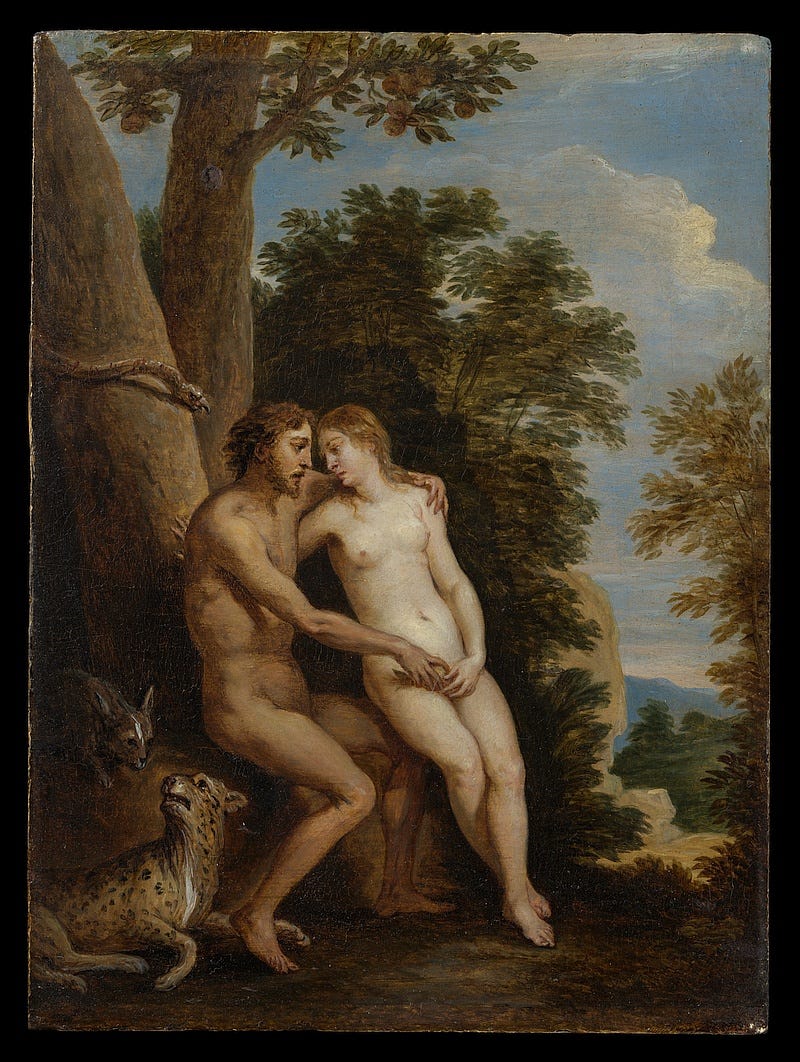
Jesus directs his disciples back to THE beginning, in order to grasp the magnitude of this issue: “from the beginning of creation, God made them male and female... Therefore what God has joined together, man must not separate” (Mk 10:6-9). The problem and root cause is Original Sin, and it is there that healing must be found.
But there is no human power that can undo Original Sin. It was for this reason that God sent His Son, to become man, so that as man – Adam – he might bring divine healing through all the layers of sin back to the beginning, and from a new beginning offer man the true way of Life. Jesus intends for his followers to be fully immersed in this task of the Redemption of human life, so that they might die to all those layers of sin in them, and begin to live, already now, the life of grace and the joy of “paradise.”
The Sacrament of Matrimony is this invitation. Marriage as a natural institution includes within it the natural end of procreation. But marriage as a Sacrament of Christ’s Church includes within it another end or purpose: “remedy of concupiscence.” As a Sacrament shared by two baptized Christians, Christ intends for marriage to be a sincere sacrifice of one’s life, and a sharing in the work of the Cross for the salvation of the world and the redemption of the human race, beginning with one’s self and one’s own family. The struggles of marriage are not without purpose.
Interestingly, Jesus does not ultimately prohibit divorce in this Gospel passage. The Church has always understood that there are some extreme circumstances where for reasons of safety and well-being a separation may be required. But Jesus does forbid attempted remarriage while one’s spouse is living. In other words, the marriage and its obligations of fidelity continue, even in situations of separation and divorce. The purpose of marriage (as a Sacrament) is more profound than the worldly “happiness” of the couple. It is the hard work of going back to the beginning, where the root causes of sin in our nature can be seen, understood, and brought to healing power of the Cross.
More than marriage counseling, couples need sacramental graces, particularly Confession/Penance. The crisis of divorce is not the end of marriage. Instead, the moment when the wine seems to have run out for the couple (cf. Jn 2:3) is an important moment of grace in which to discover the real beginning, which is faith and obedience – total trust – in Christ: “Do whatever he tells you” (Jn 2:5). And what he tells us is, “do not attempt remarriage, do not commit adultery” (Mk 10:11-12). Faithfulness to him will bring a deeper grace to the deepest problem of all, the original sin which injured us in the beginning. It brings a costly “new wine” (Jn 2:10) which is actual healing from the root cause of sin.
The goal of marriage is paradise. Already in this life, Christ wishes his followers to taste a glimpse of what was lost, what was in the beginning (Mk 10:6-9), and to manifest that prophetically to a world which does not understand how it can come about.
If we approach the teaching of Jesus (that one may not divorce and remarry) only on a human level, or only on an Old Testament level, we will remain incredulous and see it as something unrealistic and impossible to achieve (cf. Mt 19:10). We must not reduce Jesus to the level of Moses, nor equate his teachings with the best kinds of marriage therapy. There is something completely new here.
As with every part of Jesus’ teaching, there will be the Cross. But instead of being the “end,” the Cross is the “beginning.” It does not lead to death, but to life. Or rather, through a dying to self, it brings us to the restoration of our true self, and the first glimpse of paradise in the life to come. The Cross is the beginning of new life because it brings us back to the beginning where life and joy was lost. In your marriage, whether good times or bad, take up again the vows you made at the altar where you sacrificed your life. Trust fully that the sacrifice was not in vain, and allow Christ to bring healing to you, to your entire family, and even to the world.