The Holy Face
5th Sunday of Lent (B)

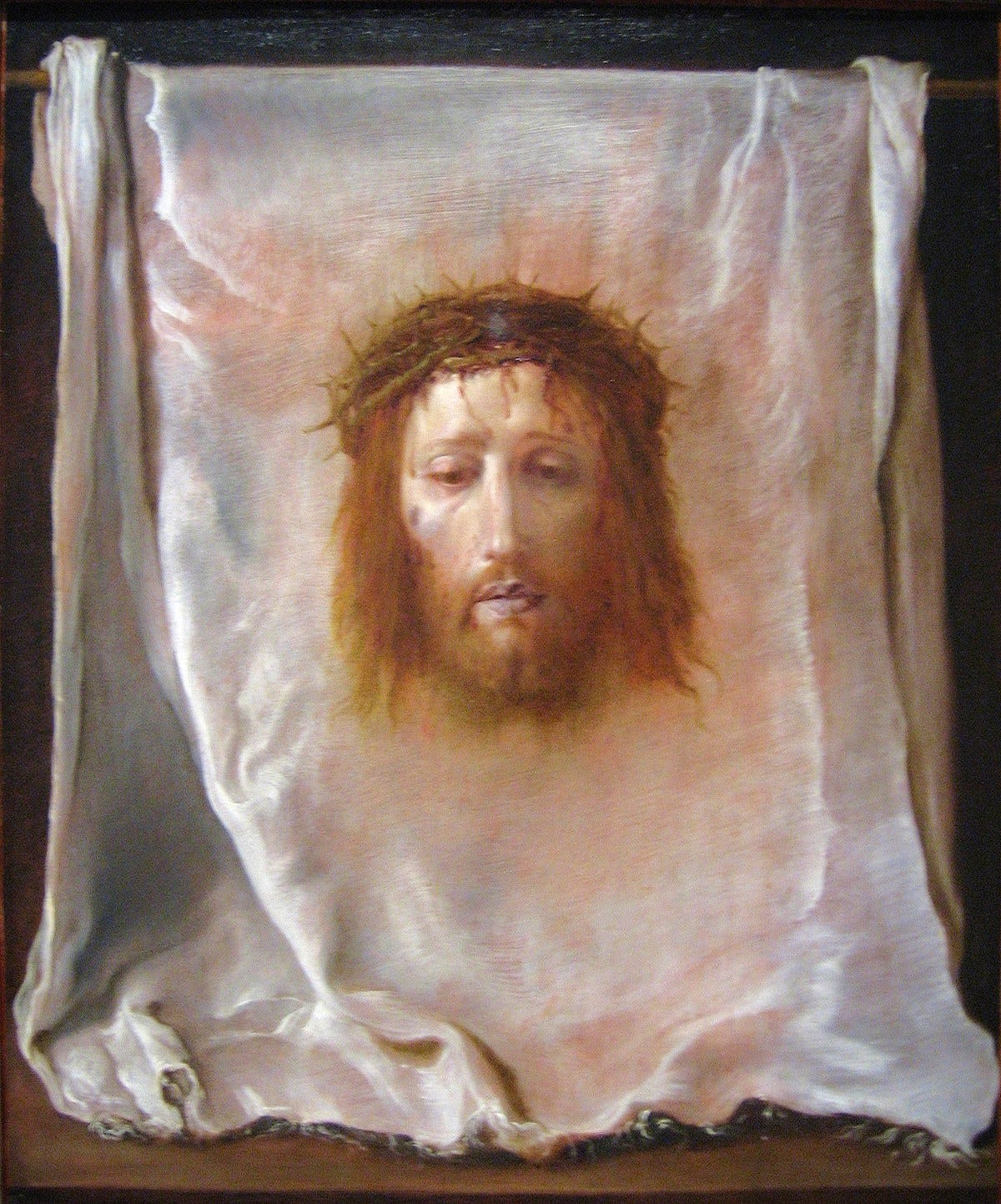
This Gospel is commonly read at funeral Masses, because Jesus’ own death is imminent: “The hour has come for the Son of Man to be glorified” (Jn 12:23). Jesus speaks of it as the moment in which the Father is glorified (12:28). The Father will honor whoever serves Him by living a life of holiness and obedience as did Jesus. Moreover, the Father says he will be doubly glorified (12:28), not only by a good life (and death), but also by the resurrection to follow.
Jesus reveals by his death how the fullness of human life comes only in the resurrection, and he uses the simple example of a grain of wheat to illustrate this: “unless a grain of wheat falls to the ground and dies, it remains just a grain of wheat; but if it dies, it produces much fruit” (12:24). The full meaning of human life will emerge only after death. Our mortal life is the “seed” for eternity. We should give attention to those interior and spiritual things we take with us when we die, and not to those material things we have to leave behind, which all pass away with this world: “whoever hates his life in this world will preserve it for eternal life” (12:25).
Thus it is an excellent Gospel to console Christians in those occasions when the “hour of death” has arrived.
The introduction to this discourse on death is curious. Some Greeks had arrived in Jerusalem for the Passover, and asked the apostle Philip to see Jesus (12:21). Jews from all over the Greco-Roman world would undertake pilgrimages to Jerusalem for the great festivals such as Passover, Pentecost, and Tabernacles (cf. Acts 2:5). However, these were Gentiles, and they had heard about Jesus, presumably from Jewish friends who had brought word of his fame back with them from previous pilgrimages! They are a sign of things to come: when Jesus is “lifted up” on the Cross, and again in the Resurrection, he will draw all men to himself (12:32) in the establishment of a universal Kingdom (12:31).
The Greeks were not able to realize their wish to see Jesus that day. After his discourse, Jesus “departed and hid himself from them” (12:36), and would not be seen in public again until the crucifixion. This is how the whole world will come to see Jesus: in the context of his passion and death (and resurrection). “We preach Christ crucified,” says St. Paul (1 Cor 1:23).
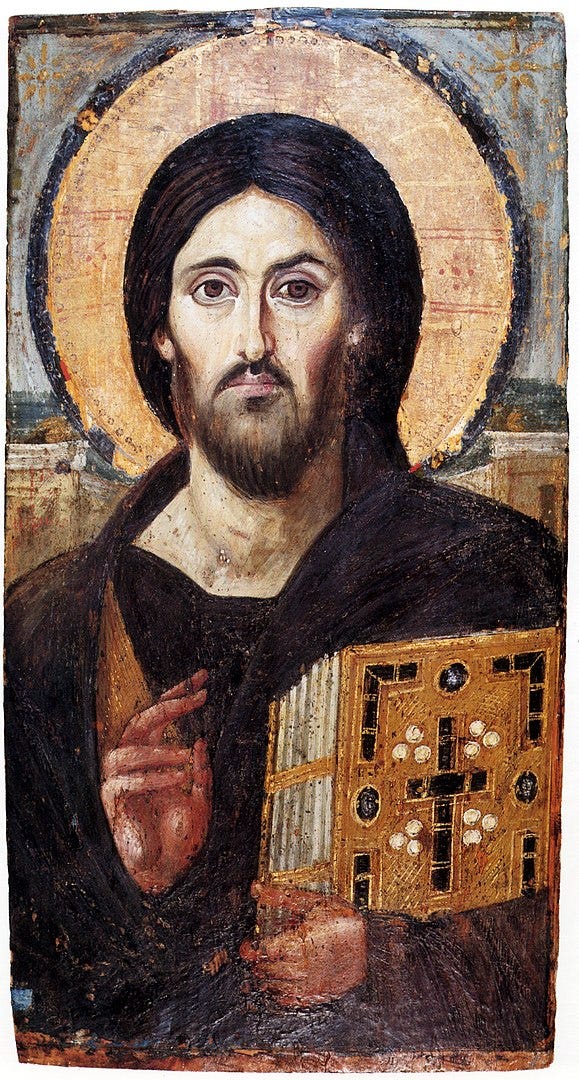
Like the Greeks, “we would like to see Jesus” (12:21). And like them, we too will come to know his face through the passion. How is it we know what Jesus looks like? The characteristics of Jesus’ face are known universally, and have been depicted in art the same way for millennia. Even the earliest known Christian icons dating from the fifth century depict Jesus the same way.
There are two ancient traditions that bring his face to us. One is “Veronica’s Veil” which we commemorate in the sixth Station of the Cross. According to this tradition, a holy woman used her veil to wipe the bloody face of Jesus as he walked to Calvary, thereby receiving the image of his face on her veil. “Veronica” is not her name, but refers to the “true image” left on the cloth.
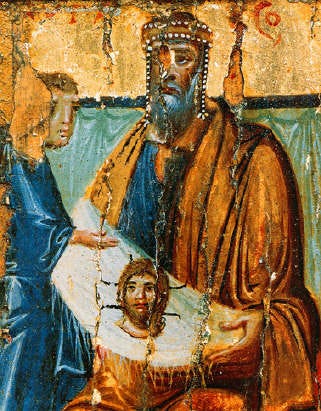
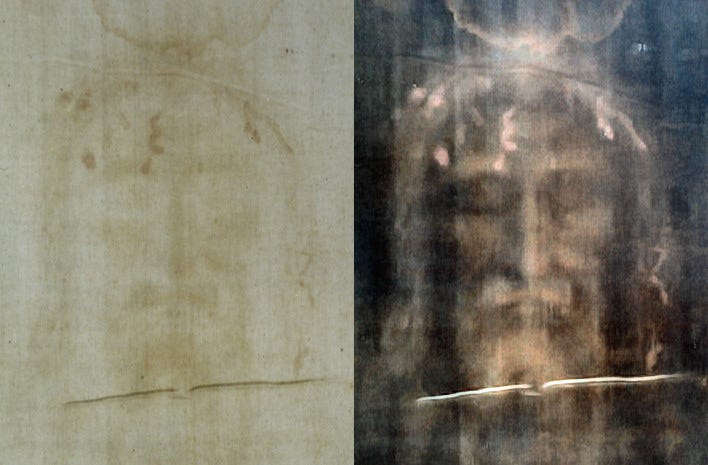
The other more important tradition, possibly connected with “Veronica,” is that of his linen burial shroud, which has mysteriously imprinted on it the full frontal and dorsal image of his tortured body, including the noble face with which we are familiar. This cloth, folded and framed to show only the face, was publicly displayed in the ancient Armenian city of Edessa during the first millennium, brought there in the first century by some disciples of the Lord. In an identical way to these Greeks who approached Philip in order to see Jesus, King Abgar who was ill sent emissaries to Jerusalem inviting Jesus to Edessa, only to find him on the cusp of being crucified. Like all the world, he would come to know Jesus only after the Resurrection, through the preaching of the Gospel.[1] Abgar was the first pagan king to be baptized, and the Armenians were the first nation to become Christian in the first century, through the “lifting up” – the “glorification” – of Jesus. And while many details from these early centuries remain obscure and legendary, it is through the Mandylion of Edessa, later venerated in Constantinople, and finally in Turin, Italy, that the whole world is able to fulfill the wish of the Greeks (Jn 20:21) and “see Jesus.”
[1] Cf. Eusebius of Caesaria (265-339), Ecclesiastical History, I.12.