Truth and Lies
12th Sunday in Ordinary Time (A)

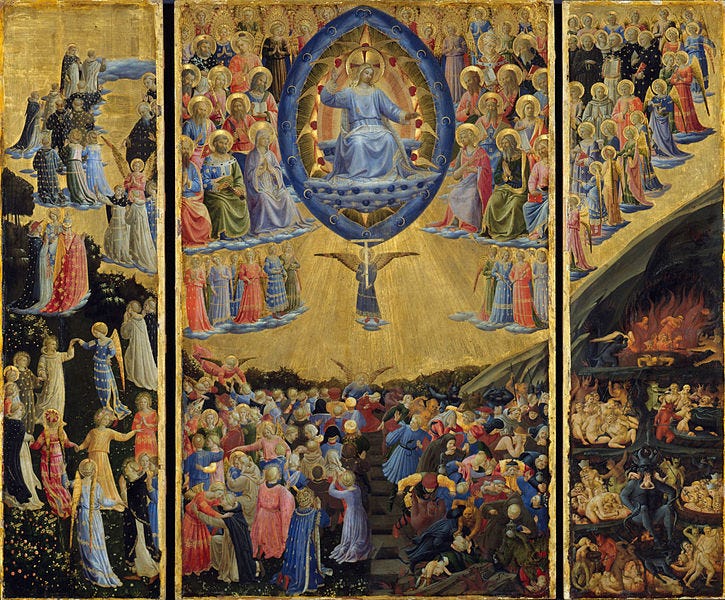
Jesus prepares his apostles to carry the Gospel into the world. They will proclaim and give witness to him, who is the fullness of truth. This truth will shine like a light in the darkness. Three times in this brief Gospel passage, Jesus tells his disciples not to be afraid (10:26,28,31). Why is it that truth requires courage?
On the one hand, truth opposes ignorance and error. Man has to learn and be educated, since he is not born with all knowledge already intact. Along the way, he misjudges and makes errors. Correction of mistakes is part of the learning process, as man grows in truth and wisdom. As she carries out her mission to preach the Gospel, the Church and her ministers exercise this ordinary role of teacher, explaining the truth, and correcting error. But the situation that Jesus refers to goes a step further, which requires the apostles to have courage.
The apostle’s task will bring each of them to the point of martyrdom. They will be opposed, persecuted, and arrested for proclaiming the truth. It is not simply ignorance and error which the Church faces, but something much more sinister.
Truth also opposes lies. A lie is a denial of the truth which is deliberate, intentional. A lie requires effort and investment. Truth is “that which is,” “the way things are,” “reality.” A lie is the deliberate attempt to create an artificial reality, which better conforms to one’s intent. The Serpent tempted Adam and Eve to become their own gods, deciding for themselves what is good and evil. Satan is the father of lies, and when he lies he is being true to his nature (Jn 8:44). In the desert he tempts Jesus to live thiss false reality of self satisfaction, power, and control.
With regard to ignorance and error, truth is a liberation; with regard to a lie, however, the truth is a threat. The apostles require courage in the proclamation of the Gospel, because they will confront the lies of the world, and the deceptions of the devil.
This situation is perfectly illustrated for us today during June, a full month of all-out propaganda to promote and inculcate the lie that there are multiple genders, that man can be whatever he wants to be, without regard to any moral law or constraint. This is not simply ignorance or error, but a deliberate attempt to impose an artificial reality. Even children know from nature that there are two genders: man is either male or female, and this is an un-erasable identity written into every fiber of his body and soul. While men and women can have vastly different temperaments and unique personalities, and while every person must deal with a complex psychological and interpersonal array of needs, feelings, and desires, one must do so precisely as a man or a woman, whose sexuality orders him and her to love, marriage, family, and children. While a man (or vice-versa a woman) may experience insecurities and disorders in seeking to live out the virtue of his masculinity (her femininity) perfectly, only the woman is the child-bearer, and the child-bearer is the woman.
The notion that there are multiple genders, that gender is independent of biology, or that one may choose one’s gender, is a lie. And while the motive for this lie may not be fully clear, the tremendous investment of money, media, and resources to promote and enforce it, are evidence that this is a denial of truth which is deliberate.
It is not for the apostle to convince others of the truth, or force anyone into the truth. The apostle need only reaffirm and present the truth in its fullness and beauty to the best of his ability. Truth has its own power, truth is its own defense. Even if one is not sufficiently prepared to articulate the full beauty of God’s truth, it suffices to highlight the truth by simply calling out the lie:
“There are more than two genders” – “No there are not”
[Man speaking] “I am a woman” – “No you are not”
The preacher of the Gospel may be accused of trying to “impose his beliefs” on others, but it is only the liar who tries to impose his beliefs. In order for a lie to survive, it must be accepted and reinforced by others, at a minimum not opposed. A lie inevitably goes beyond the liar into his interactions with others. The liar is insecure, and insists upon justification of his lie by others. The liar feels the truth as an imposition, and lashes out.
Thus, there is persecution when the lie is not accepted. School children who don’t fly the rainbow flag face peer pressure and ostracization, even expulsion. College students who don’t use artificial pronouns face course failure and loss of degree. Employees who refuse to embrace sin in the name of diversity face termination. Those who would denounce the modern Sodom and Gomorrah face lawsuits and even arrest for “hate” crimes.
Christians are being faced with a choice: either give testimony to the truth and therefore to God who is the author of “the way things are,” or deny Him for the sake of conformity and fear of repercussions. Truth requires courage: “Fear no one,” Jesus says, including those who can kill the body.
Jesus says there is one thing alone we must fear, and that is failing to stand before God on judgment day: “be afraid of the one who can destroy both soul and body in Gehenna” (Mt 10:28). Fear of the Lord is the beginning of Wisdom (Prv 9:10), but it is also the beginning of the other Gifts of the Holy Spirit, including Courage.
If we wish to grow in this courage, there is no better place to acquire it than the Sacrament of Confession, by which we place ourselves before God as on the Day of Judgment. It is difficult to openly and honestly confess one’s sins because the truth requires courage. In this case, the lies we are confronting are our own, and they are worse than the lies imposed on us by the world and the devil. Every sin is a personal lie, a deliberate intention on our part to rewrite the moral law and live according to a reality of our own making, better suited to our selfish wishes. In the Sacrament of Confession, we confront that sinful pride head-on, naming and repudiating the lies of our own making one by one. We may not even fully want to do it yet (our contrition is still imperfect), and part of our self wars against it (we engage in an ongoing battle against the stubbornness of the flesh), but in the end we are kneeling humbly before the Truth. The very effort to confess our sins acknowledges Christ before others, and assures that Christ will acknowledge us before the Father.
This is the courage called for by Jesus, and required for the proclamation of the Gospel. And because it is a courage born of humility, it allows the Gospel to be proclaimed without a need to impose the truth on others via moral judgment or condemnation. The battle is not between “us and them,” but between “all of us and the truth.”